<!DOCTYPE html>
Modern Cooling Options for Older Residences Near Union Station | One Hour Heating & Air Conditioning
Modern Cooling Options for Older Residences Near Union Station
Older residences near Ogden Union Station and the Historic 25th Street District hold character and charm. Many were built long before central air became standard. Thoughtful upgrades can deliver even cooling, quiet operation, and lower utility bills without stripping the home’s architectural detail. This guide explains proven options for the 84401 core and nearby corridors, with technical depth that matches Ogden’s climate, codes, and construction realities.
Why older Ogden homes need a different plan
Structures within walking distance of Ogden Union Station often share traits that complicate standard air conditioning. Brick or stone exterior walls reduce penetration options. Many homes use balloon framing with limited chases. Attic space can be tight under deep eaves. Basements range from full-height to partial, and some are finished with minimal mechanical room clearance. Electrical panels vary from updated 200-amp service to legacy fuse boxes. Each detail affects system sizing, airflow, and installation method.
Summer highs reach the 90s in July, and evenings cool quickly at Ogden’s elevation. That diurnal swing helps if the system modulates well and maintains low indoor humidity. True comfort depends on correct capacity, smart airflow control, and commissioning that accounts for high-desert air density. The wrong approach causes short cycling, hot rooms on upper floors, and a noisy yard condenser that clashes with a narrow lot near 25th Street.
Options that work near Union Station and Historic 25th Street
System choice should follow a Manual J load calculation and a site survey of framing, insulation, attic ventilation, and electrical. Each option below has solved real problems in the 84401 zone, and in nearby pockets like Lynn and Barrett Woods. The goal is even temperatures from parlor to second-floor bedrooms, with efficiency that meets SEER2 rules for the Mountain West.
1) High-efficiency, variable-speed central AC
Where a supply and return trunk already exist or can be added in the basement or crawlspace, a variable-speed central system pairs well with classic layouts. A condensing unit sits on a concrete pad or galvanized wall bracket. The evaporator coil installs above the furnace or air handler. The variable-speed compressor and ECM blower let the system run longer at low speed, pulling heat and moisture gently. This steadies temperatures through the afternoon, especially on the upper floor.
Brands with strong performance in Weber County include Lennox, Goodman, Carrier, Trane, Bryant, and American Standard. For tight alleys between 25th and 26th, a slim-profile outdoor unit helps preserve side-yard clearance while meeting Ogden City setback rules. The installer should confirm static pressure with a manometer, size supply and return plenums precisely, and use Manual D for branch runs. That prevents whistling registers and starved rooms.
2) Heat pump installation for cooling and shoulder-season heating
Homes near Union Station with electric-only service, or gas service limited by flue routing, benefit from a heat pump. Modern cold-climate units cool in summer and heat efficiently through fall and spring. The newer SEER2 and HSPF2 ratings reflect real-world performance under updated test conditions. Pairing a heat pump with a variable-speed air handler and a smart thermostat yields strong control in Ogden’s dry air.
Mitsubishi Electric and Daikin offer inverter-driven heat pumps that handle part-load conditions well. In North Ogden and Pleasant View, the Daikin Fit compact heat pump has solved space constraints next to narrow driveways. That same footprint helps near Historic 25th Street where side yards are tight and condenser noise matters during outdoor events at Peery’s Egyptian Theater.
3) Ductless mini-splits for additions, attics, and carriage houses
Some older residences include attic apartments, rear additions, or carriage houses converted to living space. Extending existing ductwork may be intrusive. A ductless mini-split solves that fast. Single-zone heads serve finished attics without gutting the knee walls. Multi-zone systems handle main-floor parlors, upstairs primary suites, and a basement office without overhauling original plaster or crown moldings. Mitsubishi Electric and Daikin systems are popular for quiet operation and zoned control. They also sidestep the static pressure limits in legacy duct systems.
In mixed-use buildings near the Historic 25th St District, ductless keeps upstairs living areas cool while ground-floor commercial spaces run on separate equipment. That separation helps with utility metering and after-hours comfort.
4) Two-stage AC as a balanced upgrade
If budget and panel capacity set tighter bounds, a two-stage AC offers long, quiet low-stage cycles without the higher initial cost of fully variable systems. This helps tackle hot and cold spots in split-level homes around Mount Ogden and Shadow Valley. With a smart thermostat that locks in dehumidification cycles, the two-stage system keeps second-floor bedrooms steady during 5 p.m. Sun load, then idles back at night.
5) Design-build for major renovations and new construction
Where a home near Union Station undergoes a deep renovation, a design-build path fits best. The HVAC team coordinates with framing, insulation, and electrical from the start. New construction in West Haven or Marriott-Slaterville often includes dedicated chases, larger returns for low static, and outdoor placements that meet HOA noise rules. The result is a system that glides under SEER2 targets and runs quieter than older single-stage units, with fewer elbows and cleaner airflow.
What matters most in Ogden: sizing, airflow, and commissioning
Comfort in an older Ogden home depends less on brand names and more on engineering discipline. Good equipment fails without the right math and on-site technique. The following steps improve results across the 84401, 84403, 84404, and 84405 zip codes.
Manual J load calculation
A Manual J load calculation sizes the system to the building’s actual heat gain and loss. The calculation accounts for square footage, orientation, window type, attic R-value, wall assembly, air leakage, and occupant load. In many Union Station-area homes with plaster walls and updated windows, the correct cooling load ends up smaller than rule-of-thumb guesses. An oversized unit short cycles and leaves rooms clammy even in Ogden’s dry climate. A right-sized, SEER2-rated unit runs steady and quiet, reducing energy while improving comfort.
Manual D duct design and static pressure control
Older ducts often lack adequate return air. Some have undersized branch runs that choke airflow. An installer should measure external static pressure, inspect trunk sizing, and confirm total effective length. Minor sheet-metal changes make a major difference. A larger return drop, a smoother radius elbow, or a lined plenum trims static. With proper duct design, a variable-speed blower actually delivers the CFM that the Manual J calls for, even at altitude.
SEER2 compliance and 2026 efficiency context
SEER2 replaced legacy SEER to reflect updated test conditions that better model ducted systems. For Ogden and the Mountain West, the current guidance points homeowners toward higher SEER2 ratings that cut bills while meeting the new baseline rules. Upgrading an old 10-SEER unit to a 16-SEER2 system can reduce cooling costs by 30% or more, depending on home envelope and thermostat behavior. That savings shows up in Weber County utility bills through July and August.
Refrigerant lineset, brazing, and evacuation
Lineset work in older basements needs care. Where possible, the team routes new copper in conditioned space to limit heat gain. Brazing should use nitrogen flowing through the tubing to prevent oxidization scale. After assembly, evacuation must reach a deep vacuum verified on a micron gauge. Proper dehydration and a standing vacuum test protect the compressor. A clean, dry system paired with a factory-matched evaporator coil outlasts rushed installs every time.
Condensate, electrical, and condenser placement
Ogden’s historic lots leave little room behind fences. A condensing unit set on a level concrete pad or a wall bracket keeps it above drifting debris and irrigation. The electrical disconnect should be within sight and weatherproof, with correct wire gauge and breaker size per the nameplate. The condensate drain line from the coil needs a proper trap, slope, and a safe discharge location. In finished basements, a condensate pump with an overflow switch prevents drywall damage.
Smart thermostats and zoning
Smart thermostats manage staging, fan profiles, and dehumidification cycles. In split-level homes off Washington Boulevard or near Mount Ogden Park, a proper zoning layout can calm temperature swings between floors. Zoning dampers must be sized to avoid dead-heading the blower. A bypass is rarely the right fix; better to balance minimum airflow and create a pressure relief strategy in the design.
Commissioning checklist
Commissioning makes the system real. The installer should verify refrigerant charge by superheat and subcooling, confirm airflow with a flow hood or static-to-CFM chart, and set blower speeds that match the coil and duct design. Temperature split across the coil should land in an expected range considering Ogden’s dry-bulb and indoor RH. These steps turn a good install into a great one for 84403 and 84405 families.
Local constraints near Union Station that shape the plan
Noise rules and lot setbacks affect condenser placement in the Historic 25th St District. Alley access can limit crane use for rooftop units on mixed-use buildings. Some residences back to commercial parcels, which changes sound expectations and condenser clearance. For homes with brick facades, penetrations should follow best practice to protect masonry and prevent water intrusion. Ogden City permits require equipment data, electrical details, and in some cases historic review if exterior lineset covers front a public way.
Proximity to Weber State University and McKay-Dee Hospital influences scheduling for deliveries along Harrison Boulevard. Summer projects often ramp during WSU break, which can speed material handling. For lakeside cabins and second homes closer to Pineview Reservoir, freeze protection for condensate lines and lineset insulation is more critical due to cooler evenings.
Choosing equipment that fits Ogden’s housing stock
The brands below show reliable performance across Weber County elevations and dry summers. Selection should match load, duct capacity, and space.
Mass-market options: Goodman, Lennox, Carrier, Trane, and Bryant cover a wide range of budgets and feature sets. High-end or space-limited options: Daikin, Mitsubishi Electric, and American Standard offer inverter-driven systems with slim outdoor footprints and strong low-speed performance. The Daikin Fit has helped many North Ogden and Harrisville homeowners with limited side-yard depth while hitting SEER2 targets.
Factory-Authorized Dealer status matters because it ties installation to warranty protection. NATE-certified installers with EPA Section 608 Universal handle refrigerants correctly. A licensed HVAC contractor with Utah S350 credentials knows local code and coordinates with Ogden City inspections. These details keep the manufacturer’s warranty intact and reduce call-backs during July heatwaves.
What a site visit in the 84401 corridor usually finds
In the Union Station area, technicians often discover small return grilles, a patchwork of flex duct in low attics, and a furnace closet converted from a pantry. Panel amperage may be 100A with limited spare breakers. Windows may be updated, but attic insulation can be uneven near eaves. The walkthrough documents these items, then the proposal pairs an AC or heat pump to that reality. Sometimes the best answer is a hybrid approach: a right-sized central system for main areas and a ductless head for a west-facing second-floor bedroom that bakes in late sun.
Where knob-and-tube wiring remains in a plaster wall, refrigerant line routing needs careful planning. Wall-mounted mini-split heads avoid big chases and let electricians update circuits later without reopening fresh HVAC work. If the structure shares walls with a neighboring property, sound and vibration isolation pads on wall brackets protect both sides.
Energy savings and rebates for Weber County homeowners
Moving from a 10-SEER legacy unit to a 16-SEER2 variable-speed AC cuts cooling energy by roughly a third in many Ogden homes. When ducts are sealed and returns are right-sized, the savings improve. Rocky Mountain Power Wattsmart Incentives may apply to qualifying SEER2 equipment and heat pumps. Federal tax credits under Section 25C can offset part of the project. Final amounts depend on model, efficiency tier, and installation scope. A reputable installer will identify the rebate path and file paperwork correctly.
In neighborhoods like Shadow Valley and Mount Ogden where homes often exceed 2,500 square feet, two systems or zoning can trim runtime and reduce peak draw during 4–7 p.m. Utility windows. Smart thermostats with geofencing and setback schedules further tighten bills without sacrificing comfort.
Comparing solutions for older residences near Union Station
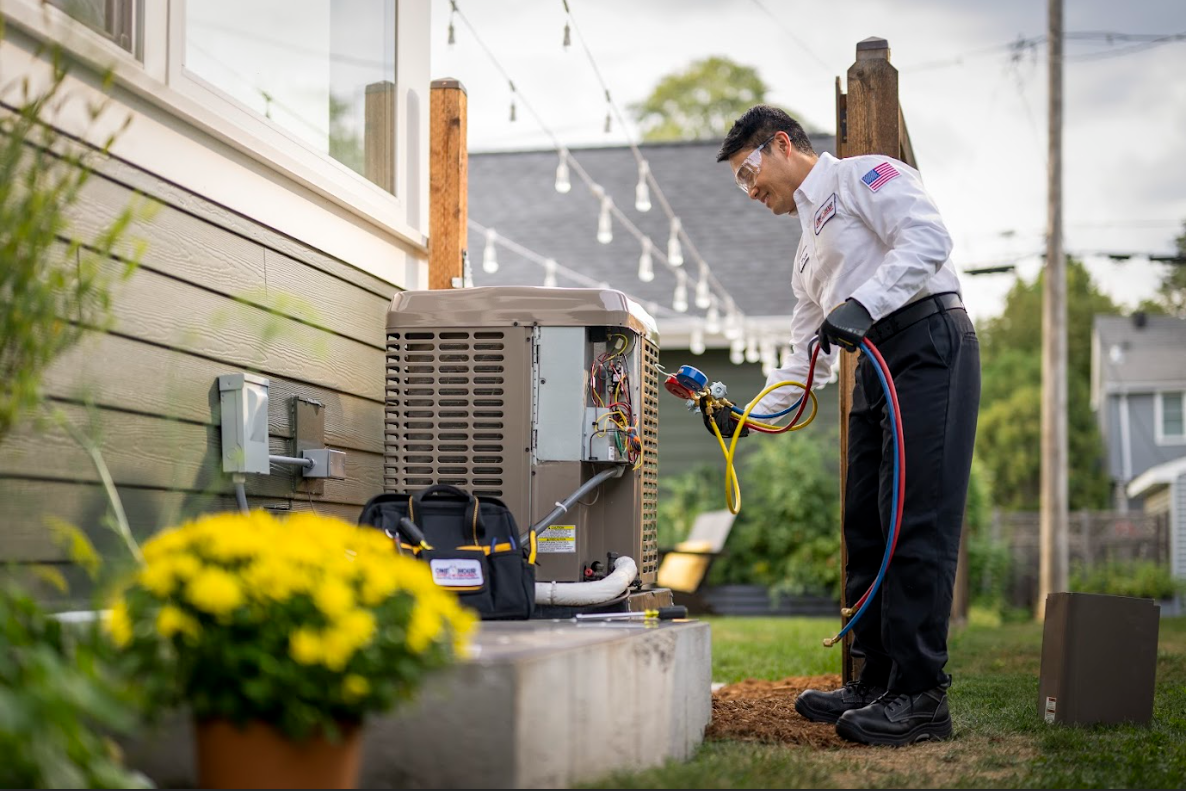
Choosing the right system means weighing finish impact, comfort, and cost. Below is a concise decision helper used for 84401 projects.
- Variable-speed central AC: Best where ducts exist or can be improved; quiet, even cooling; strong SEER2 performance.
- Heat pump: Adds efficient heating for spring and fall; good for electric-only homes; inverter models handle part-load well.
- Ductless mini-split: Minimal disruption to plaster and trim; ideal for additions, attics, or mixed-use buildings near Historic 25th Street.
- Two-stage AC: Solid comfort upgrade on a budget; long low-stage cycles, better humidity control.
- Design-build: Right for major renovations and West Haven new construction; integrates chases, returns, and venting from framing onward.
The best outcome in the Union Station district often blends solutions. A compact Daikin Fit or Lennox variable-speed outdoor unit preserves side-yard clearance. A ductless head in the converted attic studio solves persistent afternoon heat. The main level stays on central air with a correctly sized evaporator coil and a return that meets the blower’s CFM needs.
Installation day details that protect an older home
Good crews plan tool paths to protect original floors and stairwells. Drop cloths, foam corner guards, and clean-out staging reduce dust. Wall cores for linesets follow mortar joints where possible to protect brick. Lineset covers match trim color on visible elevations. The installer confirms that the electrical disconnect sits out of direct splash from downspouts and that the condenser clears snow drift zones common along north property lines in 84404 and 84414.
Technicians label the electrical panel, note breaker sizes, and record refrigerant data for the homeowner’s binder. The final walkthrough shows how to clean a ductless filter, how to change a central return filter, and how to adjust thermostat schedules for Ogden’s evening cooldown.
Common questions from Ogden homeowners
How long does an installation take? A straightforward AC replacement often completes in one day. A new system with duct modifications may take two days. A multi-zone ductless project ranges from one to three days depending on head count and line routing.
Will the new unit meet current standards? Yes, a quality installer specifies SEER2-compliant equipment for Utah. The proposal lists the exact model ratings. For 2026 and beyond, variable-speed and heat pump options position the home for higher efficiency without design changes later.
What about rebates? Many projects in Ogden qualify for Rocky Mountain Power Wattsmart Incentives. Federal credits may apply too. The installer should provide forms and line up documentation from the manufacturer.
Can a smart thermostat help a historic home? Yes. With the right staging and fan profiles, smart controls stretch low-stage run time, smooth room-to-room temperatures, and use Ogden’s cool nights to advantage.
Do small side yards limit AC size? No. Slim condensers from brands like Daikin can fit narrow setbacks while delivering strong capacity. Wall brackets are another option when ground space is tight near property lines.
Pre-install checklist for 84401 and nearby zip codes
A quick homeowner check speeds design and keeps the proposal precise for the 84403, 84404, and 84405 corridors.
- Confirm panel amperage and note open breaker spaces.
- Locate current returns and supply registers on each floor.
- List hot or cold rooms and the times they struggle most.
- Verify attic and crawlspace access clearances.
- Share any permit or historic considerations with the estimator.
Sharing photos of the furnace area, outdoor pad location, and any finished soffits also helps the estimator flag obstacles before installation day.
Where One Hour Heating & Air Conditioning fits in Ogden
The team serves Ogden, North Ogden, South Ogden, Riverdale, Washington Terrace, Roy, Pleasant View, West Haven, Harrisville, and Marriott-Slaterville. Projects range from design-build in new construction near the East Bench foothills to careful retrofits in the Historic 25th St District. Many homeowners near Weber State choose quiet, variable-speed systems that keep studies and nurseries comfortable during late-afternoon classes and clinics at McKay-Dee Hospital.
As a licensed HVAC contractor (S350) with NATE-certified installers and EPA Section 608 Universal credentials, the company follows Manual J for load, Manual D for duct design, and strict commissioning practices. Factory-Authorized Dealer status with leading brands helps protect warranties. For complex retrofits, the team pulls permits with Ogden City and coordinates inspections to reduce downtime during mid-July heat.
Costs, timelines, and what affects them
Pricing depends on home size, equipment tier, duct modifications, electrical upgrades, and access. In many 84401 and 84403 projects, a straightforward central AC replacement with a matched coil lands in a mid-range budget. Adding zoning, upsizing returns, or integrating ductless zones increases scope. Heat pumps carry a higher initial price but can offset winter gas or electric use during mild months.
Most single-system installations complete in one to two days. Multi-zone ductless projects or full design-build installs take longer. Supply chains for brand-specific components like slim condensers or communicating thermostats are stable in Ogden, but lead times for certain high-SEER2 models can fluctuate in peak season.
A real example near Union Station
A two-story brick home a few blocks from Ogden Union Station had a 20-year-old single-stage AC and uneven cooling. The second floor lagged by 6–8°F on summer afternoons. The audit found a 1,600 CFM blower pushing through undersized returns and long, narrow branches. Static pressure measured high. The team installed a variable-speed 16-SEER2 system from Lennox, added a larger return drop, and reworked two elbows into long-radius fittings. A compact condenser on a wall bracket kept the alley passable.
Commissioning dialed in 400 CFM per ton with confirmed superheat and subcooling. The homeowner reported a 30–35% drop in Weber County utility use for cooling during July, and the upstairs reached setpoint without window units. Noise outside remained low enough for evening patio use.
Entity-focused signals that matter for local search—and your comfort
Every project references core service entities like AC installation, HVAC replacement, system sizing, and air conditioning commissioning. The work fixes inefficient cooling, high utility bills, hot and cold spots, and end-of-life systems in the 15+ year range. Parts such as the condensing unit, evaporator coil, refrigerant lineset, supply and return plenums, condensate drain line, electrical disconnect, and condenser pad or wall bracket receive documented attention. Appliance choices include variable-speed AC, two-stage cooling, heat pumps, ductless mini-splits, multi-zone systems, and SEER2 rated equipment.
Local signals include Ogden zip codes 84401, 84403, 84404, 84405, and nearby 84414 for North Ogden. Neighborhoods such as East Bench, Shadow Valley, Mount Ogden, Lynn, West Haven, Marriott-Slaterville, and Barrett Woods each shape the plan. Landmarks like Weber State University, Ogden Union Station, Peery’s Egyptian Theater, Mount Ogden Park, Pineview Reservoir, and McKay-Dee Hospital give geographic anchors that align service capacity with real routes and timelines.
Ready for air conditioning installation Ogden homeowners can trust?
For homeowners near Union Station and across Ogden, the best next step is a site visit and Manual J load calculation. That clarifies equipment size, duct corrections, and whether a heat pump or ductless zone makes sense. A clean, verified install protects the home’s character and brings reliable comfort through July heat.
Transaction and trust details at a glance: NATE-certified installers; EPA Section 608 Universal; Utah S350 licensed HVAC contractor; RMGA member; Free in-home estimate; 0% financing options on approved credit; Factory-Authorized Dealer; Rocky Mountain Power Wattsmart Incentives guidance; $500 instant rebate on full system installs or a free smart thermostat with a new AC (ask for current promotions). Projects typically complete in one to two days once scheduled, and all work includes documented commissioning.
Schedule a free on-site estimate today. Service covers Ogden, East Bench, Shadow Valley, Mount Ogden, 84401, 84403, 84404, 84405, and 84414. The team also installs in North Ogden, South Ogden, Riverdale, Washington Terrace, Roy, Pleasant View, West Haven, Harrisville, and Marriott-Slaterville. Get a proposal that respects your home’s history and delivers modern cooling that feels right on day one.
air conditioning installers Ogden
air conditioning installation Ogden
One Hour Heating & Air Conditioning delivers dependable heating and cooling service throughout Ogden, UT. Owned by Matt and Sarah McFarland, the company continues a family tradition built on honesty, hard work, and reliable service. Matt brings the work ethic he learned on McFarland Family Farms into every job, while the strength of a national franchise offers the technical expertise homeowners trust. Our team provides full-service comfort solutions including furnace and AC repair, new system installation, routine maintenance, heat pump service, ductless systems, thermostat upgrades, indoor air quality improvements, duct cleaning, zoning setup, air purification, humidifiers, dehumidifiers, and energy-efficient system replacements. Every service is backed by our UWIN® 100% satisfaction guarantee. If you are looking for heating or cooling help you can trust, our team is ready to respond.
One Hour Heating & Air Conditioning
1501 W 2650 S #103
Ogden,
UT
84401,
USA
Phone: (801) 405-9435
Website: https://www.onehourheatandair.com/ogden
License: 12777625-B100, S350
Social Media:
Facebook
X
Instagram
Pinterest
YouTube
Find us on the map:
Google Maps Listing